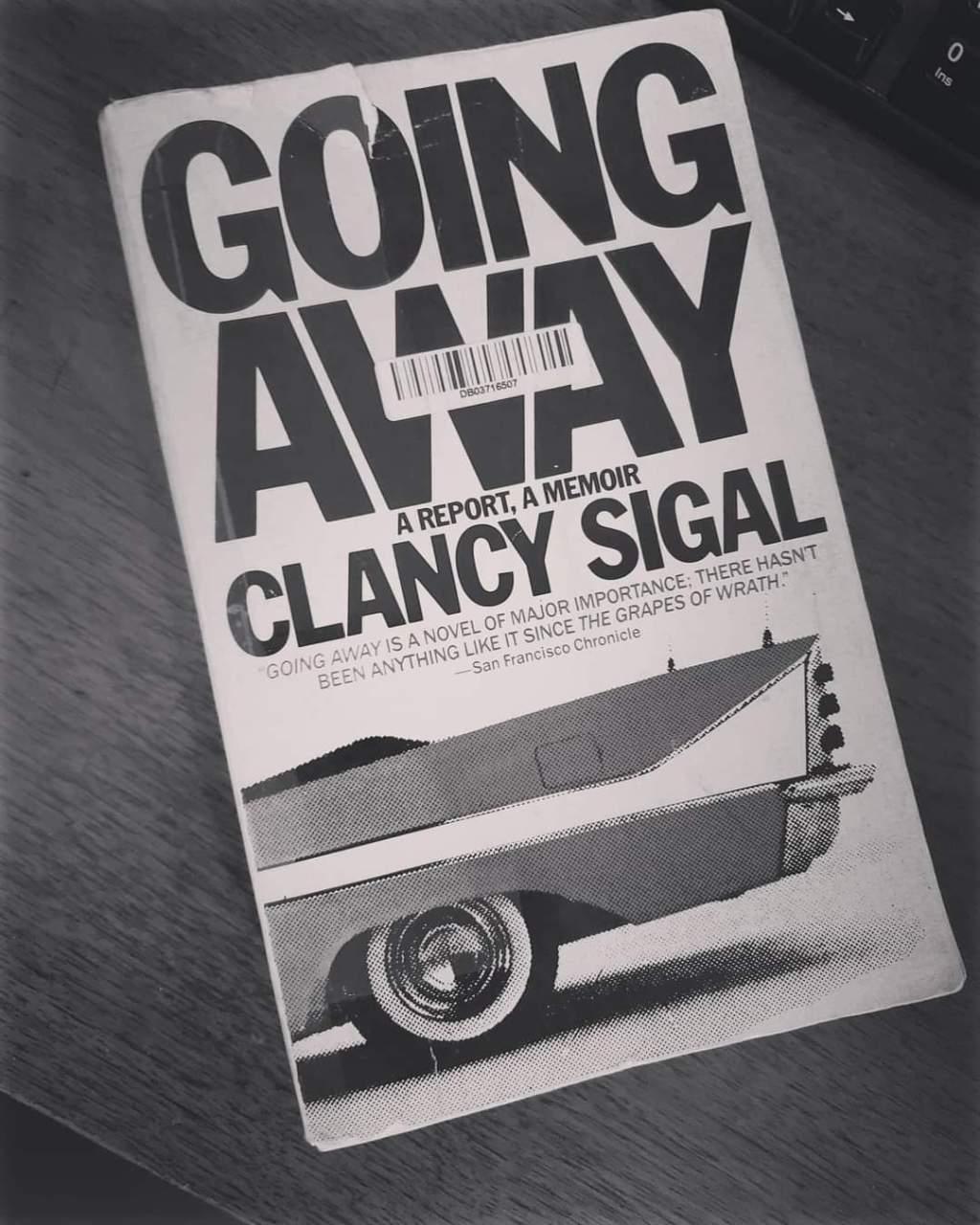
Originally appeared in The Coldest Issue # 1
At 500+ pages, it took me a while to read, but I was very glad I did. This may be one of the best and most insightful books I’ve ever read.
It is, as far as I can tell, a semi-autobiographical account that centers around the author’s disillusionment with the United States, as he drives across the country in a Chrysler DeSoto in 1956. Along the way, he visits and encounters a huge cast of characters. Hitchhiking Wobblies. Conservative ranchers. Old friends. Periodically, he tried to keep informed about the Soviet invasion of Hungary and whether this marked the beginning of World War 3.
The book is also an account of the post-World War 2 radical left in the US. The author was involved in the Communist Party, did student organizing, worked for the United Auto Workers’ left faction and got blacklisted out of Hollywood.
The interactions between him and the many old friends and ‘comrades’ was really spot on. The way the book portrays people on the left he was once close to drift away and how people take different paths (and how they themselves view/justify those paths) was very familiar. The factionalist battles, their destructiveness, the mistakes made and the language around them was really excellent and rang true.
The author is really trying to make sense of the near total defeat of the American left that he poured himself into. I really sympathize with the author’s disillusionment of not only the radical left, but his home country and what it turned into. So many of the characters I’ve met variations of. So many of the described conflicts and situations were so similar to what I’ve seen and experienced.
My only criticism of the book is that the narrator of the book seems to not really have consistent emotional attachments to people. At times, he comes off as cold, stiff and fleeting with people. This isn’t unusual. Being involved on the radical left, sometimes people get “organizer brain” and view people as pawns to move around or a means to an end. The best depiction of this would be the union organizers in John Steinbeck’s In Dubious Battle. For me, I found it hard to sympathize with this aspect of Going Away. Even in doubt and disillusionment, I think back to some of the people I’ve encountered with fondness and not some past means to an end.

 The Coldest Zine